May 10, 2026 • Yuki Brennan • 10 min reading time • Prices verified June 18, 2026
Clear Silicone Edge Guards for the Nursery: Non-Toxic Claims vs. Real Certifications
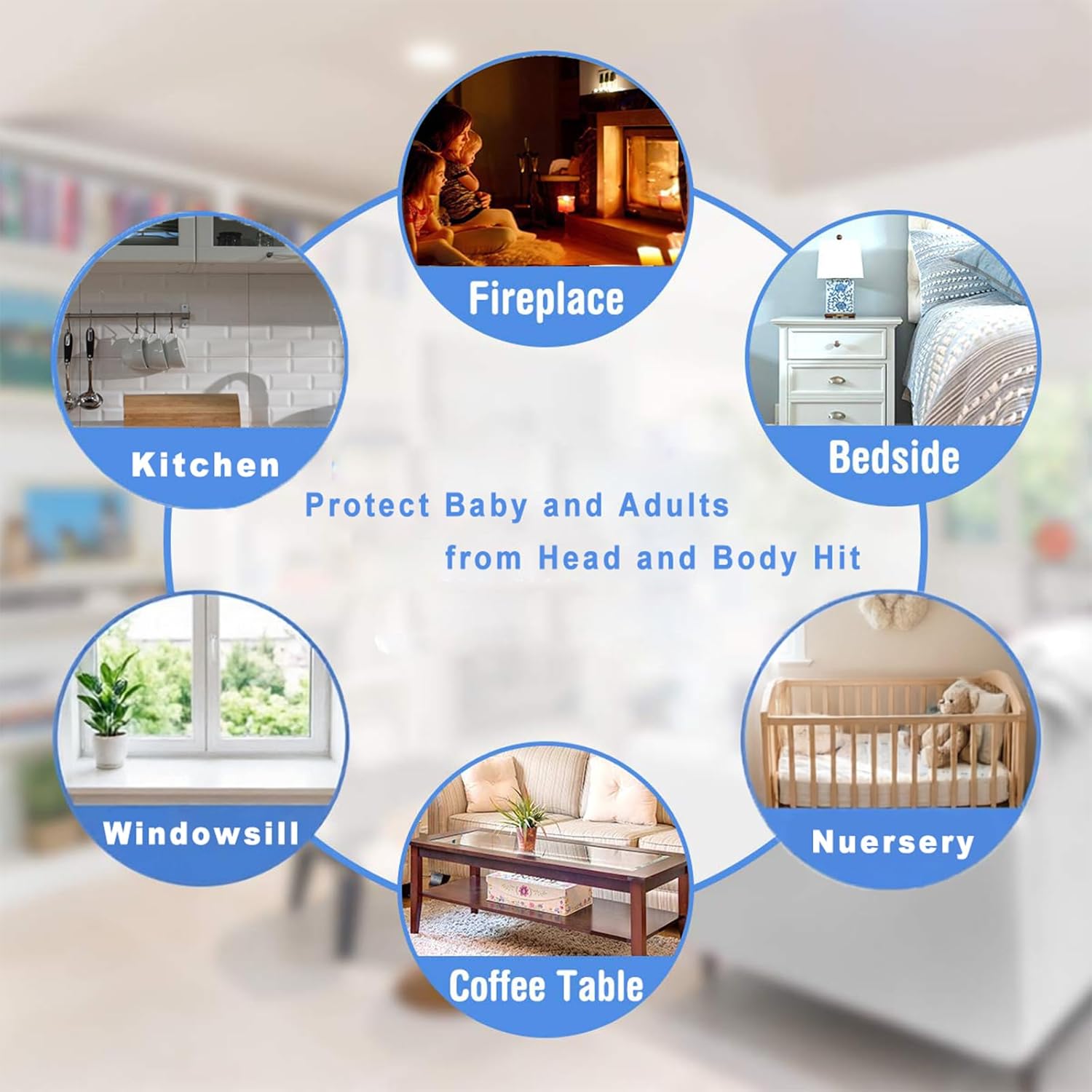
If you’ve been scrolling product listings for clear silicone edge guards and wondering why one $8 pack and one $45 set can both claim to be “non-toxic” — you’re asking exactly the right question. A silicone edge guard is a soft, flexible strip or corner cap that adheres to sharp furniture edges — crib rails, dresser corners, bookshelf edges — to cushion bumps and, in the case of teething babies, give them something less damaging to gnaw on than raw wood. The “non-toxic” label sounds reassuring, but in 2026 it carries no legal definition in the United States: any manufacturer can print it without meeting a single third-party standard. The certifications that do mean something — and the ones that are mostly marketing — are what this guide is about. By the end, you’ll know which marks to look for, what they actually require, and how to match a guard to your furniture, your budget, and your nursery aesthetic without second-guessing yourself at checkout.
Why “Non-Toxic” Alone Tells You Almost Nothing
The phrase “non-toxic” is unregulated in U.S. consumer product labeling. The U.S. Consumer Product Safety Commission — the federal agency that sets mandatory safety rules for infant and children’s products — does not define or administer the term “non-toxic,” meaning manufacturers who print it on packaging bear no legal obligation to substantiate it through independent testing. The CPSC’s published infant product safety guidance makes no mention of “non-toxic” as a CPSC-administered claim.
The Environmental Working Group, which maintains the widely used Skin Deep and Healthy Living databases, consistently flags this gap in its material safety and labeling guidance: marketing language like “natural,” “clean,” and “non-toxic” frequently appears on products that have never been assessed by a third party. For nursery products specifically — items that enter a baby’s mouth through normal chewing behavior — the EWG recommends looking past label language to documented certification.
So what does carry weight? Three frameworks are worth knowing.
Food-contact grade silicone is the most directly relevant standard for anything a teething infant will chew. Silicone approved for food contact under the U.S. Food and Drug Administration’s Code of Federal Regulations, Title 21 (often abbreviated CFR 21) has been evaluated for chemical migration — meaning the question “does anything harmful leach out?” has been formally tested. Manufacturers who meet this standard will typically say “FDA food-contact compliant” or “CFR 21-compliant” rather than just “non-toxic.” That specificity is the tell.
REACH compliance refers to the European Union’s chemical regulation framework — Registration, Evaluation, Authorisation and Restriction of Chemicals. A product described as REACH-compliant has been assessed against a list of substances of very high concern that currently runs well over 200 entries, including phthalates, heavy metals, and certain flame retardants. Many premium nursery brands voluntarily pursue REACH compliance even for products sold in the U.S., because the EU standard is more stringent than most domestic equivalents.
OEKO-TEX STANDARD 100, as described in the OEKO-TEX Association’s own published standards documentation, requires independent-institute testing against more than 100 harmful substances — including allergenic dyes, formaldehyde, and a range of plasticizers. Most commonly associated with textiles, the OEKO-TEX Association has expanded its scope to include components and accessories. For silicone accessories with fabric components (a silicone corner cap with a textile backing, for example), this certification becomes directly relevant.
The Certification Comparison
Before going deeper on shopping decisions, here’s a side-by-side of what you’re actually comparing when you read product pages:
| Claim or Mark | Who Administers It | What It Tests | Self-Declared? |
|---|---|---|---|
| ”Non-toxic” | Nobody | Nothing required | Yes — no verification Edge 2M — $6.99 |
| FDA CFR 21 food-contact | U.S. FDA | Chemical migration from silicone | No — spec-based standard Bébé — $16.99 |
| REACH compliant | EU ECHA | 200+ substances of concern | Partially — often third-party verified Bébé — $16.99 |
| OEKO-TEX STANDARD 100 | OEKO-TEX Association | 100+ harmful substances | No — independent institute testing Baby — $21.78 |
| ASTM F963 (toy safety) | ASTM International | Mechanical and chemical safety | No — third-party lab required for infant items Baby — $21.78 |
The bottom line: FDA food-contact and OEKO-TEX STANDARD 100 are the two marks that indicate actual third-party scrutiny. REACH compliance is meaningful but harder for U.S. consumers to verify independently. ASTM F963 — the standard most commonly applied to children’s toys — is sometimes cited by edge guard manufacturers and does carry independent lab testing requirements. It’s worth noting when you see it, though it was not specifically designed for silicone accessories.
Three Tiers of Silicone Edge Guards: What Your Money Actually Buys
Good Housekeeping’s baby-proofing product coverage notes that silicone edge guards vary considerably in shore hardness — the numerical rating for material firmness. For a teething infant, a softer durometer means the guard compresses more easily under bite pressure, reducing the risk of gum discomfort. Products that disclose shore hardness rather than simply describing themselves as “soft” or “flexible” are being more transparent about material specification, and that transparency tends to correlate with the tier.
Budget Tier: Under $15
At this price point, visible third-party certification is rare. Products in this range typically carry “non-toxic” labeling only, with no disclosed silicone grade, no FDA food-contact documentation, and no OEKO-TEX or REACH reference in the product description. Parents Magazine’s furniture baby-proofing guidance raises a point worth internalizing here: adhesion method matters as much as material claims, especially in the nursery. Budget guards frequently rely on unspecified adhesive formulations, and reviewers consistently note that the adhesive fails before the silicone does — meaning the guard peels away and becomes a potential choking hazard for a mobile infant.
Budget-tier guards are adequate for furniture a baby will not chew — high shelving, the back corners of a dresser, low-traffic edges. For crib rails and any surface within reach of a teething infant, the certification gap at this price point is a meaningful risk, not a theoretical one.
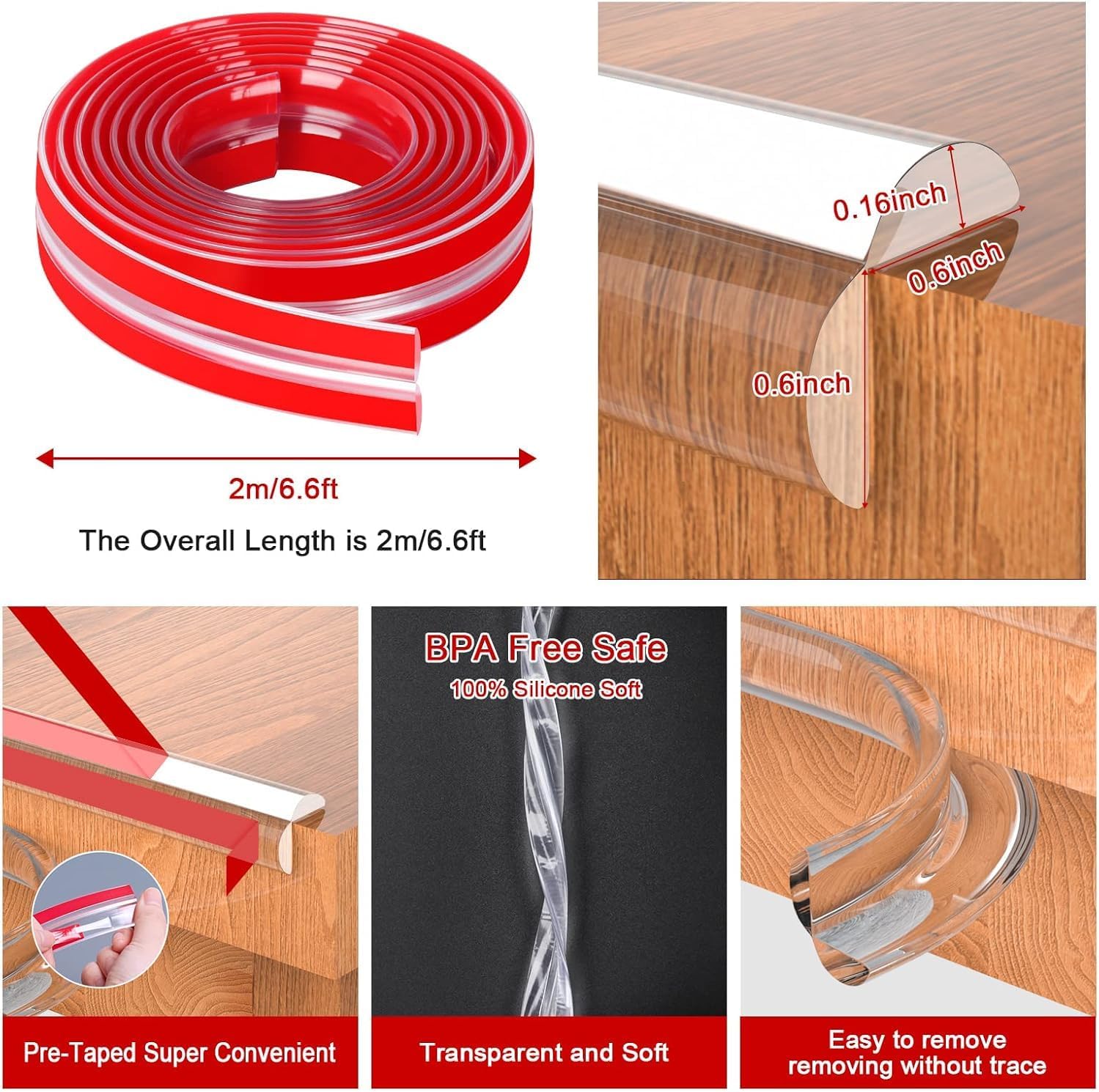
Edge 2M
$6.99
In stock on Amazon
Check price on AmazonMid-Tier: $20–$45
This is where FDA CFR 21 food-contact compliance and REACH documentation begin appearing in product listings. Some manufacturers in this range also cite ASTM F963 testing. HealthyChildren.org — the American Academy of Pediatrics’ consumer-facing resource — consistently emphasizes that any accessory introduced into a baby’s sleep or play environment should not present a choking hazard in the event of failure. Mid-tier products increasingly address this through channel-lock mounting systems, where the guard clips around the furniture edge rather than relying solely on adhesive. A guard secured by channel-lock geometry requires deliberate adult removal; a determined nine-month-old is far less likely to detach it accidentally.
Adhesion quality also improves noticeably in this range. Products that specify 3M VHB tape — a recognized benchmark for adhesion strength — begin appearing at around $25. For parents working with painted or lacquered nursery furniture, mid-tier guards that describe themselves as “removable without surface damage” are worth the small premium over permanent-adhesive versions. The Environmental Working Group’s material safety and labeling guidance notes that adhesive residue on nursery furniture is a separate concern from the guard material itself; a removable-adhesion system eliminates that variable.
For crib-rail guards specifically, this tier is the recommended entry point. The cost-per-month math favors it over budget options once replacement frequency is factored in: a guard that stays adhesive, resists yellowing, and survives aggressive chewing for 12–18 months costs less per month than a cheaper version replaced every 6–8 weeks.
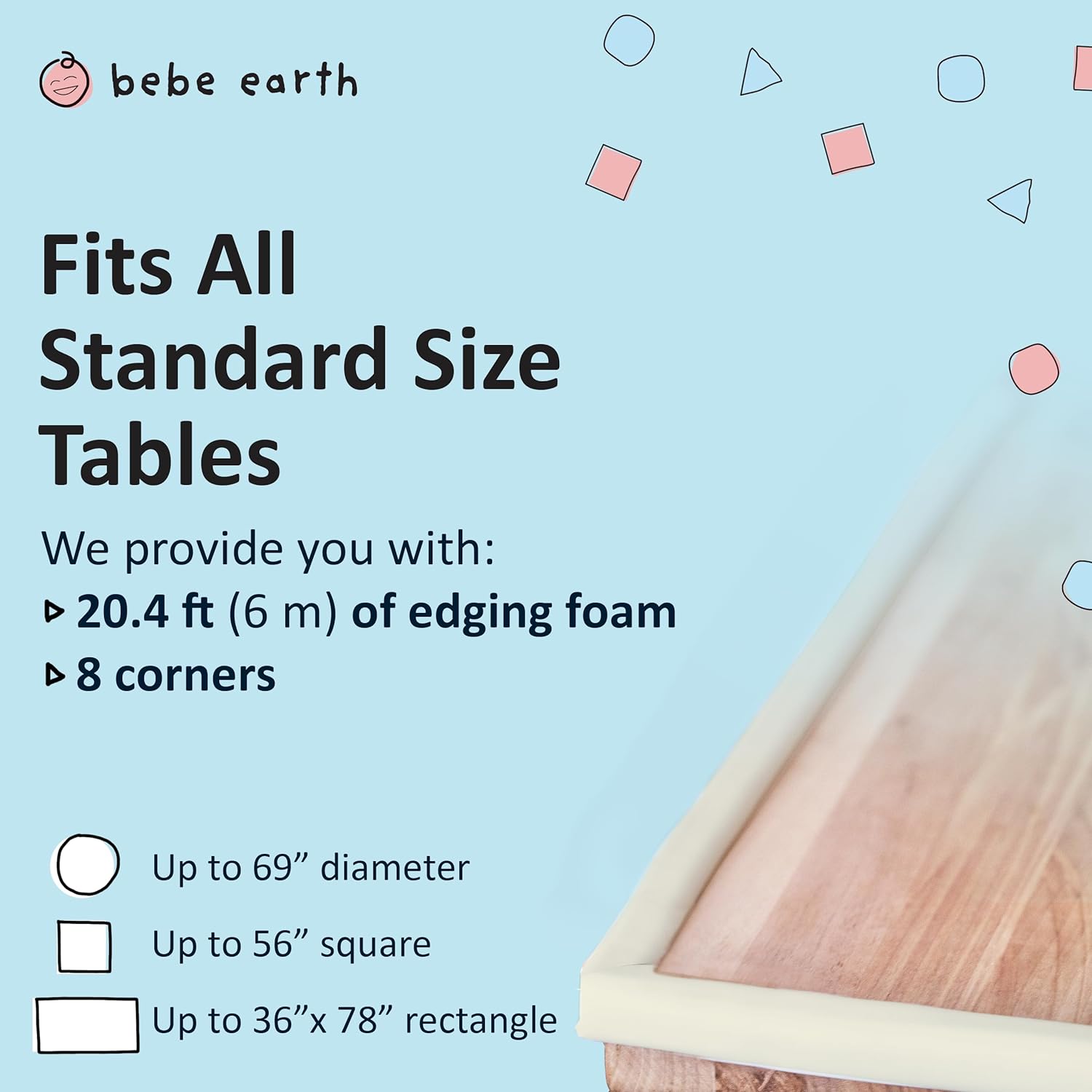
Bébé
$16.99
In stock on Amazon
Check price on AmazonPremium Tier: $45 and Above
At the upper end of the market, multiple certifications appear together — FDA food-contact compliance, OEKO-TEX STANDARD 100 or REACH documentation, and disclosed material grades are all more common. Brands operating in boutique parent retail channels typically publish their certification documentation on their websites rather than requiring customers to request it. Good Housekeeping’s baby-proofing product reviews note that premium-tier edge guards tend to maintain optical clarity longer than budget alternatives, which matters for clear silicone used on statement furniture — a guard that yellows within four months on a white-lacquered crib rail defeats the aesthetic purpose of choosing clear over foam.
Shore hardness disclosure, UV-resistance language, and fit specifications (minimum and maximum rail width for channel-style guards) are also more reliably present at this tier. For parents with convertible cribs from brands like Babyletto or Davinci — which sometimes have narrower or shaped top-rail profiles than standard American cribs — the detailed fit specifications at this price point prevent the loose-guard problem that creates its own choking risk.
The CPSC’s infant product safety guidance underscores that product failure modes matter as much as material composition. A premium guard that specifies pull-force ratings or channel-lock geometry is engaging with failure-mode risk in a way that a budget guard with “non-toxic” label copy is not.
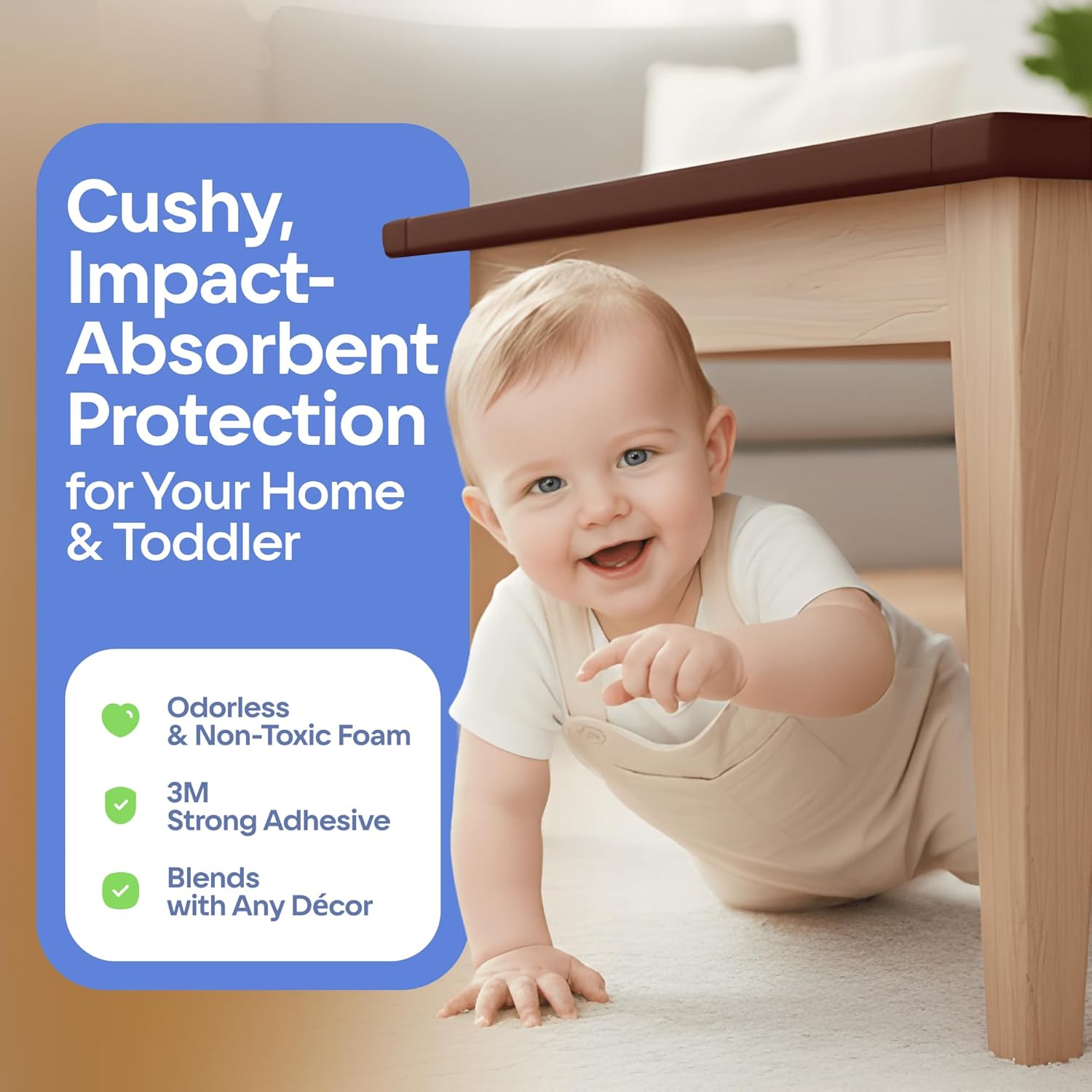
Baby
$21.78
In stock on Amazon
Check price on AmazonMatching to Your Nursery: Fit, Aesthetics, and the Yellowing Problem
Clear silicone guards have an aesthetic advantage that painted or foam alternatives can’t match: they disappear into the furniture, which matters if you’ve built a nursery around a specific timber finish or color palette. But “clear” is not uniform across products or price points.
Yellowing is the primary aesthetic complaint with budget silicone guards, documented across parenting product review coverage from outlets including Parents Magazine and What to Expect editorial summaries. UV exposure and repeated teething contact accelerate the process. If UV resistance or yellowing resistance is not mentioned in the product description, assume the guard is not formulated to resist it. Placement in low-UV environments — away from direct window light — extends clarity regardless of price tier, but it is not a substitute for a UV-resistant formulation.
For crib-rail guards, measure the top rail before purchasing. Most standard American cribs use a top rail between 1.5 and 2.5 inches wide; channel-style guards spec a minimum and maximum width in the product description. A guard that’s too loose shifts under chewing pressure; one that’s too tight may not seat properly and creates the peeling-off risk identified above. This measurement takes thirty seconds and eliminates the most common fit-related return.
For dresser and bookshelf corners, L-shaped corner caps are the relevant form factor. These adhere to flat surfaces rather than wrapping edges, so adhesion quality and removability become the primary variables. Products that specify adhesive type and confirm no-residue removal are worth prioritizing over those that describe adhesion only as “strong.”
Decision Rules
If you take nothing else from this guide, let these five rules serve as your framework at checkout:
If the product will enter a teething infant’s mouth — crib rails, any accessible furniture edge — require at minimum FDA CFR 21 food-contact compliance or OEKO-TEX STANDARD 100 certification, stated explicitly in the product description, not just implied by “non-toxic” label copy.
If you’re working with statement or heirloom furniture, prioritize a removable adhesion system. The $5 saved on a permanent-adhesive version is not worth a refinishing bill on a lacquered dresser.
If aesthetics are non-negotiable, look for UV-resistance language in the product description. Clear silicone in a low-UV environment from a mid-to-premium-tier brand holds clarity significantly longer than unspecified silicone.
If budget is the primary constraint, the $20–$35 range delivers the best-documented safety-to-cost ratio. Spending below $15 on crib-rail guards specifically is the one area where the price-point savings are not worth the certification gap.
If you’re gifting, a set from a brand with visible OEKO-TEX or FDA food-contact documentation signals research — which, for registry gifts in this category, is exactly what a thoughtful gift-giver wants to communicate.
The certification gap between marketing language and verified safety is real, but it is easy to navigate once you know what you’re reading. A few extra seconds on the product page — looking past “non-toxic” to the actual certification mark — is the single most efficient thing you can do for nursery material safety in this category.