May 24, 2026 • Yuki Brennan • 9 min reading time • Prices verified June 18, 2026
Convertible Crib Toddler Guard Rails: Brand Compatibility Is Everything
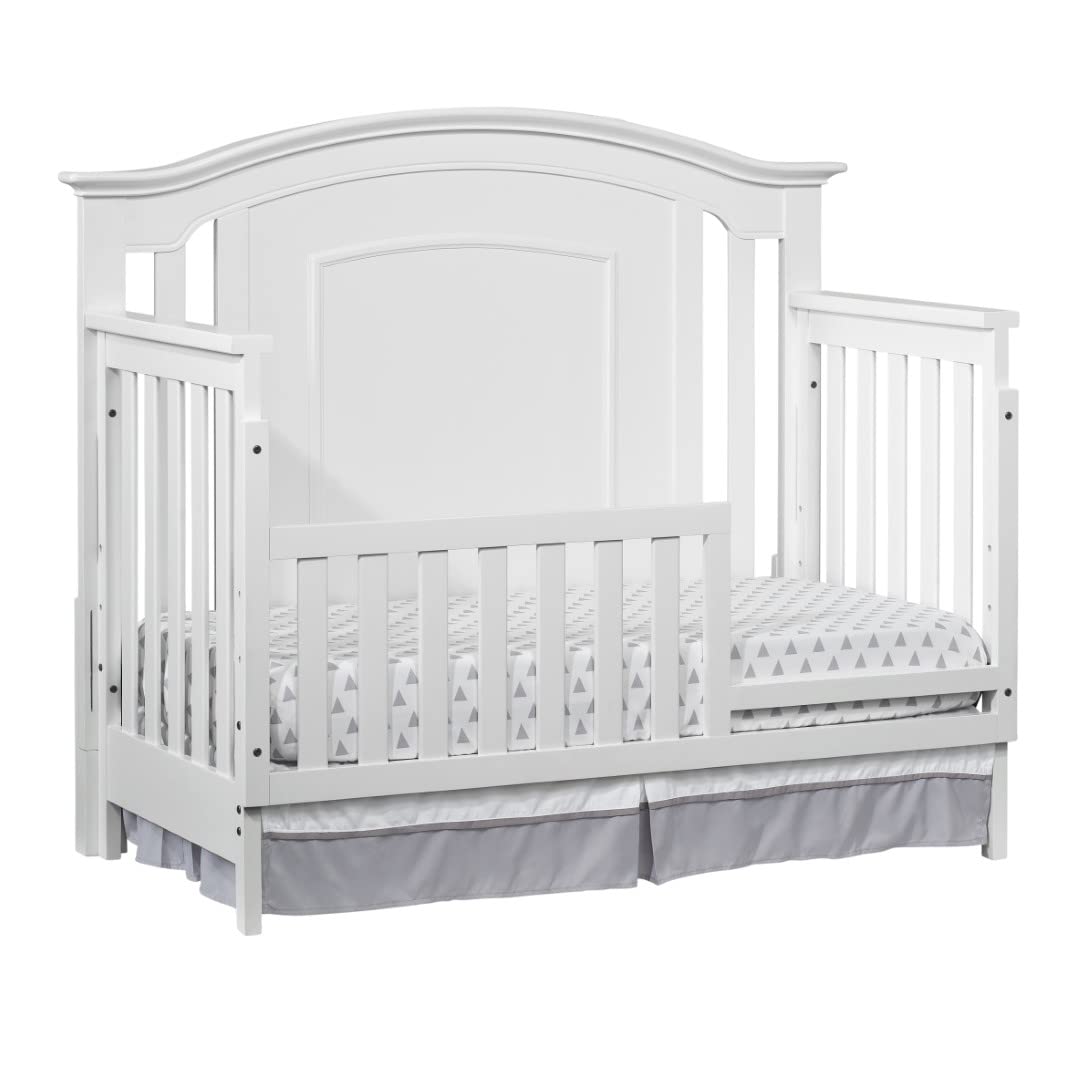
A convertible crib is exactly what it sounds like: a crib that can be reconfigured — converted — into a toddler bed as your child grows, typically somewhere between 18 months and 3 years. The front rail comes off, the mattress drops to a lower position, and suddenly you have a low-to-the-floor bed a toddler can climb in and out of independently. What most parents don’t realize until they’re already mid-conversion is that this newly open side needs a guard rail — a low barrier that runs along part of the bed’s edge to keep a rolling toddler from tumbling out overnight. The catch? Unlike a standard piece of nursery furniture, toddler guard rails are almost never universal. The hardware mounting system, the rail height, the bed-frame slot design — these are brand-specific, sometimes even model-specific. Buy the wrong one and you’re left with a piece that won’t attach safely, or won’t attach at all.
This guide is for parents who are at or near the conversion decision — you have a crib model, you’re wondering when and how to make the switch, and you need to know exactly what to look for in a guard rail before you spend $40 to $120 on one that might not fit.
Why “Universal” Toddler Guard Rails Are Mostly a Myth
Walk through any big-box baby retailer and you’ll see guard rails marketed as “fits most toddler beds.” That language is doing a lot of heavy lifting. What it typically means is that the rail uses a strap-under-the-mattress attachment system — a fabric strap or metal hook that tucks beneath the mattress rather than bolting into the bed frame. These designs do fit a wide range of beds because they don’t require any frame hardware. But they come with a real tradeoff: they rely on mattress weight and friction to stay in place, which means a lightweight toddler mattress or an active child who pushes against the rail repeatedly can loosen the connection over time.
The U.S. Consumer Product Safety Commission — the federal agency (CPSC) that sets safety rules for children’s products — regulates toddler beds under 16 CFR Part 1513. That standard requires that a toddler bed guard rail withstand specific lateral force without dislodging. Strap-based universal rails can meet this standard when properly installed, but “properly installed” assumes the mattress is a certain weight and the rail fits the bed’s geometry. CPSC incident data, cited across several consumer safety summaries, includes falls that occurred when strap-based rails loosened at night.
The proprietary rails made by crib manufacturers for their own beds attach via the same hardware channels the crib’s original side rail used — a much more mechanically positive connection. BabyGearLab’s convertible crib review methodology notes that hardware-based attachment is consistently the more stable configuration when the components are purpose-made for each other. The trade-off is cost and availability: proprietary rails typically run $60–$120 and must be sourced directly from the brand or an authorized retailer.
By the numbers:
| Attachment type | Typical price | Fit risk | Stability |
|---|---|---|---|
| Strap/under-mattress (universal) | $30–$60 | Low-to-medium | Moderate |
| Proprietary frame hardware | $60–$120 | Minimal (if correct model) | High |
| Bolt-on frame-integrated | $80–$150 | Model-specific | Very high |
How to Identify Which Rail Your Crib Actually Needs
Before you search for a guard rail, you need three pieces of information from your crib. Pull out the original manual — or find it on the manufacturer’s website — and look for:
1. The model number, not just the brand. Pottery Barn Kids, for example, has sold multiple crib lines over the years. The Larkin crib and the Kendall crib use different conversion hardware even though they’re from the same brand. Parents.com’s buying coverage and multiple aggregated registry guides flag this as one of the most common compatibility mistakes parents make. The model number is typically on a sticker on the inside of the crib’s headboard or foot board, or in the original manual’s header.
2. Whether the crib was designed to convert at all. A true convertible crib will have a conversion kit listed in its product documentation and may have come with a toddler rail included or offered as an add-on. Some cribs marketed as “3-in-1” or “4-in-1” do convert; others use those numbers to describe styling variations, not structural conversions. If the manual doesn’t mention a toddler rail or conversion kit, the crib probably wasn’t designed for hardware-integrated conversion.
3. The slat spacing and frame channel dimensions. This matters if you’re seriously considering a third-party rail. The opening in the frame where a rail’s mounting bracket slides must match, or the rail won’t seat safely. The Spruce’s overview of toddler bed rails recommends measuring the frame slot width and depth before purchasing any rail marketed for a specific crib family, since manufacturers occasionally change specs mid-production without updating marketing materials.
Once you have the model number, go directly to the manufacturer’s website and search for “conversion kit” or “toddler guard rail” alongside the model name. Most major brands — DaVinci, Graco, Delta Children, IKEA (for the Sundvik and Gulliver lines), Pottery Barn Kids — list compatible guard rails in a dropdown on the crib’s product page or in a separate accessories section.
Brand-by-Brand Compatibility: What the Research Shows
Rather than a comprehensive directory (models change seasonally and this space moves fast), here’s what owners and reviewers consistently report about the major brand families:
DaVinci / Million Dollar Baby family: DaVinci cribs are frequently cited in BabyGearLab’s round-ups for strong conversion ecosystems. The brand maintains a dedicated conversion-kit catalog, and most rails are model-grouped so one rail fits a defined crib family (e.g., the Jenny Lind family, the Jayden family). Owners in aggregated review threads report that the conversion hardware is included in many crib purchases, reducing the add-on cost. The rails themselves are solid wood, consistent with the brand’s GREENGUARD Gold (an indoor air quality certification from UL Solutions, meaning the finished product has been tested for chemical off-gassing) positioning across their catalog.
Pottery Barn Kids: PBK’s custom-fit bumper sets and rail kits are model-specific and sold as part of the brand’s “Complete Crib” program. The upside is a seamlessly styled finish — the guard rail matches the crib’s finish and material. The downside is price ($80–$120 for the rail alone) and the fact that PBK cribs are sometimes discontinued, leaving parents of older models searching for discontinued SKUs. The Spruce notes that PBK’s toddler rails are reliably available for active crib lines but recommends purchasing the rail at crib purchase if you plan to convert, to guarantee availability.
Delta Children: Delta’s broad catalog includes a large number of entry-to-mid-range convertible cribs, and the brand maintains one of the more navigable compatibility lookup tools on their website. Rails are generally in the $40–$70 range, hardware-based, and widely stocked at major retailers. Across aggregated owner reviews, the most consistent note is that Delta rails are easy to install — a factor that matters at 2 a.m. when a toddler has just rolled out and you’re converting in a hurry.
IKEA (Sundvik, Gulliver, Sniglar): IKEA’s convertible models are designed with IKEA-specific hardware and rails, sold separately in-store and online. The upside: IKEA replacement parts are usually inexpensive ($20–$50 range). The downside: IKEA crib rails only fit IKEA cribs, full stop, and the brand has been known to discontinue crib lines without a long accessory tail. If you have an older IKEA crib, check part availability before assuming the rail is still in production. The healthychildren.org guidance on toddler bed transitions notes that any rail — regardless of brand — should leave a gap of no more than 3.5 inches between the rail and the mattress edge, a spec worth verifying against IKEA’s published dimensions before purchase.
Graco: Graco’s convertible cribs are among the most registered in the U.S. market, and the brand’s toddler rail options are widely stocked. Graco groups rails by crib series (e.g., Benton, Hadley, Theo) and the compatibility chart is available on their website and on Amazon’s product pages. Owners consistently report that Graco’s strap-based rails — used on some models — require a firm, heavy mattress to maintain proper tension; parents using a thinner or lighter organic mattress may want to verify the fit with Graco customer support before buying.
The Decision Framework: If X, Then Y
You’re looking at a guard rail purchase right now. Here’s how to route the decision:
If your crib is from a major brand (DaVinci, Delta, Pottery Barn Kids, Graco, IKEA) and is a current or recent model: Go directly to the manufacturer’s website, enter your model number, and buy the brand-specific rail. The price premium over a universal rail is real — typically $20–$60 more — but the hardware fit is materially more reliable and easier to install correctly. This is the default recommendation.
If your crib is discontinued or the proprietary rail is no longer available: A strap-based universal rail from a brand with strong CPSC compliance documentation (the Spruce and Consumer Reports both maintain tested shortlists) is a viable option, but you must use it with a mattress that meets the rail manufacturer’s weight requirements. Read those requirements before you buy.
If you’re buying a crib today and plan to convert eventually: Factor the guard rail cost into your total budget now, and check that the brand has an active accessories catalog before committing to the crib. A $300 crib with a $40 proprietary rail is a better long-term deal than a $250 crib whose rail was discontinued six months ago.
If aesthetics are a priority (a designed nursery room with a defined finish): Proprietary rails from the crib’s own brand are almost always the right call — they match the wood tone, hardware finish, and profile of the original piece. Universal rails are functional but often visually mismatched.
If your toddler is an active, physical sleeper: Prioritize hardware-based attachment over strap-based, regardless of cost. Consumer Reports’ toddler bed safety overview recommends verifying the installed rail’s lateral resistance before the first unsupervised night — give it a firm push and confirm there’s no rocking or give before you consider the installation complete.
The crib you chose for the nursery was a long-term investment. The guard rail that completes the conversion deserves the same five minutes of model-number research. Get the model right first — everything else follows.