May 20, 2026 • Yuki Brennan • 9 min reading time • Prices verified June 18, 2026
BPA-Free Isn't Enough: How to Read Silicone Teether Safety Claims Like a Pro
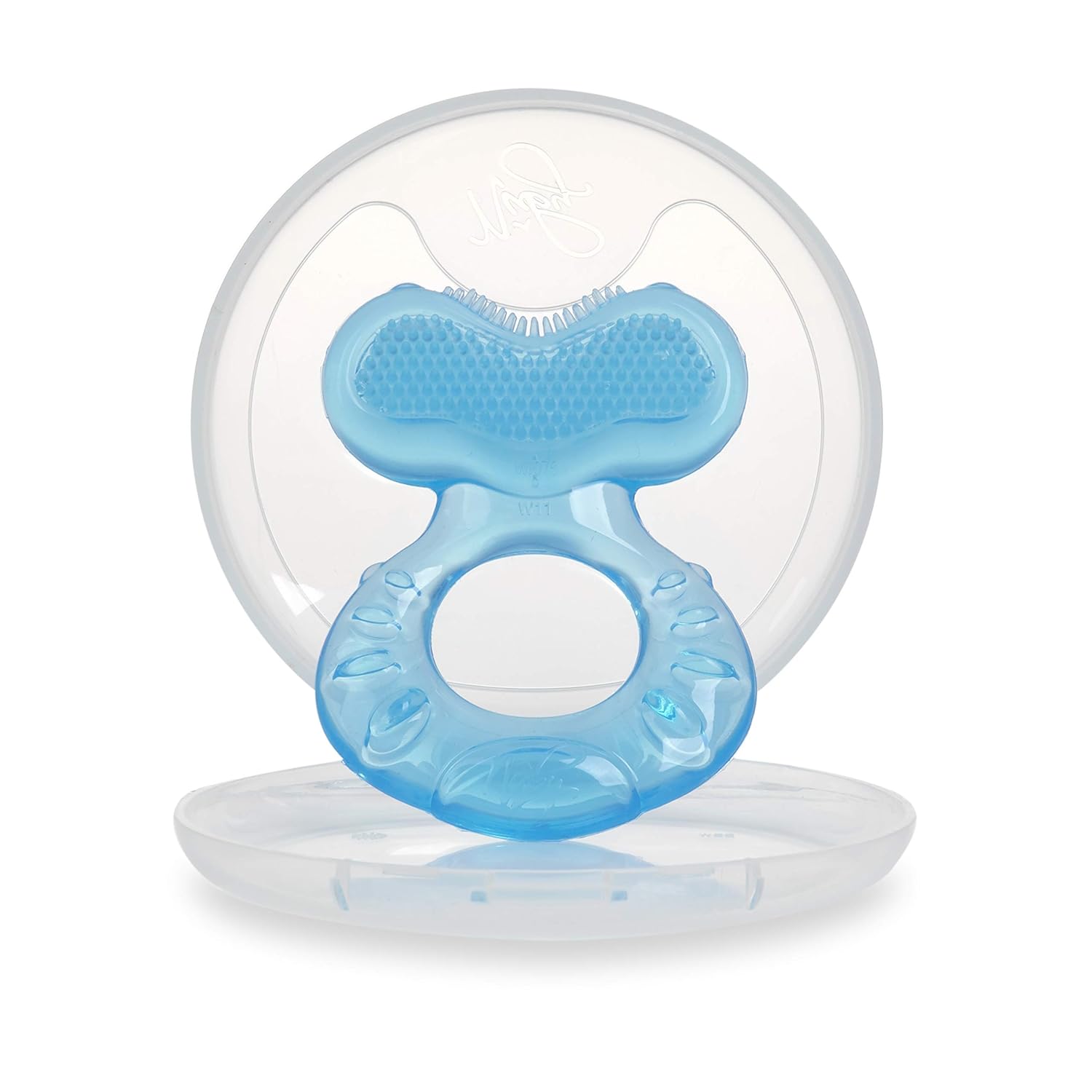
When a product says “BPA-free” on the label, it feels like a green light. BPA (bisphenol A) is a chemical that used to appear in hard plastics and has been widely linked to hormone disruption, so removing it sounds like the right move. The problem is that “BPA-free” is now one of the lowest possible bars a baby product can clear — and manufacturers know exactly how reassuring those three letters sound to a parent who is exhausted, overwhelmed, and trying to do right by their kid. If you’re standing in a store aisle or scanning a product page trying to figure out whether a silicone teether is actually safe for a baby who chews hard and constantly, this guide is for you. We’ll walk through what the label claims actually mean, which certifications carry real weight, and the specific questions worth asking before anything goes in your baby’s mouth.
Why “BPA-Free” Became a Marketing Term Instead of a Safety Signal
Here’s the short version of what happened: once BPA gained a bad reputation, manufacturers replaced it with structurally similar compounds — BPS (bisphenol S) and BPF (bisphenol F) being the most common — that don’t have to be disclosed on labels because they technically aren’t BPA. Researchers at institutions including the Environmental Working Group have raised concerns that several BPA substitutes may carry similar endocrine-disrupting (hormone-interfering) properties. The EWG’s product safety research notes that “BPA-free” claims do not guarantee the absence of related bisphenol compounds, a distinction that matters most when the product is being chewed by an infant for hours a day.
For silicone specifically, the bisphenol conversation is mostly a distraction. The real safety question with silicone teethers is about silicone grade and filler content — a separate issue that “BPA-free” does nothing to address.
The two silicone formulations you’ll encounter:
- Food-grade silicone: A platinum-cured polymer with no organic fillers. Platinum-curing (as opposed to peroxide-curing) leaves essentially no curing byproducts in the finished material. This is what high-quality teethers are made from.
- Silicone blends with fillers: Some manufacturers extend silicone with chalk (calcium carbonate), plastic resins, or unspecified inorganic fillers to reduce cost. The finished product may pass basic safety checks while still leaching filler compounds under the mechanical stress of chewing.
A quick field test that reviewers and safety-focused parent communities frequently reference: pinch and twist the teether firmly, then look for any white residue or color change. Pure food-grade silicone should not show white stress marks. If it does, fillers are almost certainly present. This isn’t a lab result — it’s a reasonable proxy, not a guarantee — but it’s a test the product should pass before anything else.
The Certifications That Actually Mean Something (and What They Test For)
Not all safety certifications are equivalent. Some tell you the product was tested by a third party against a defined chemical standard. Others tell you the manufacturing environment met certain criteria. For silicone teethers, the following hierarchy is the one worth understanding.
ASTM F963 (U.S. Toy Safety Standard)
ASTM F963 is the U.S. baseline — it’s the federal toy safety standard enforced through the Consumer Product Safety Improvement Act (CPSIA). The CPSC’s business guidance documentation confirms that items marketed for children under 12 must comply with ASTM F963, which covers limits on heavy metals (lead, cadmium, antimony, etc.), mechanical hazards, and flammability. This is the floor, not the ceiling. A product that only cites ASTM F963 compliance has cleared minimum U.S. legal requirements.
EN 71 (European Toy Safety Standard)
EN 71 is the European Union’s equivalent, and it is frequently cited as more stringent than U.S. standards on chemical migration limits — the amount of a substance that can transfer from the product into saliva during normal chewing. EN 71 Part 3 specifically covers migration of dangerous elements. A product carrying both ASTM F963 and EN 71 compliance has cleared two independent regulatory frameworks, which meaningfully reduces risk.
LFGB (German Food-Safe Standard)
LFGB (Lebensmittel-, Bedarfsgegenstände- und Futtermittelgesetzbuch) is a German food-contact materials standard that is often described as the most stringent consumer product chemical test available for silicone. Products certified under LFGB have been tested specifically for migration of substances under simulated chewing and food-contact conditions. Loulou Lollipop, one of the premium silicone teether brands frequently compared on this site, cites LFGB compliance alongside ASTM F963 — that combination is the benchmark worth looking for.
OEKO-TEX STANDARD 100 (Relevant for Fabric-Wrapped and Textile Teethers)
OEKO-TEX is primarily a textile certification, but it appears on teething products that incorporate fabric components — muslin rings, fabric-wrapped wooden handles, and combination toys. Per the OEKO-TEX Association’s published standard documentation, OEKO-TEX STANDARD 100 tests for more than 100 harmful substances including formaldehyde, heavy metals, pesticide residues, and pH levels. For any teether with a fabric element, this certification is the equivalent of LFGB in the textile world — it’s the one that actually verifies what’s in the material, not just that one specific bad actor was removed.
By the numbers:
| Certification | Scope | What it tests |
|---|---|---|
| ASTM F963 | U.S. minimum | Heavy metals, mechanical hazards |
| EN 71 Part 3 | EU standard | Chemical migration into saliva |
| LFGB | German food-contact | Migration under chewing simulation |
| OEKO-TEX STANDARD 100 | Textiles | 100+ substances incl. pesticides, pH |
Red Flags on Product Pages and Packaging
Knowing what to look for is half the equation. Knowing what to be skeptical of is the other half.
“Non-toxic” with no certification listed. “Non-toxic” is not a regulated term in the U.S. Any product can print it on the box without third-party verification. Healthy Children, the American Academy of Pediatrics’ parent-facing publication, specifically cautions families to look past unverified marketing language and seek products with documented third-party testing. The phrase means nothing on its own.
“Safe silicone” or “premium silicone” without specifying food-grade. Silicone is not a single material — it’s a family of polymers with significant variation in purity and filler content. A product that says “safe silicone” is making an assertion, not providing evidence.
Country of manufacture with no third-party test documentation. This is not a blanket statement about any geography — it’s about documentation. A product manufactured anywhere that cannot provide a third-party test report (a Certificate of Analysis from an accredited lab like SGS, Intertek, or Bureau Veritas) is asking you to take the manufacturer’s word on safety. For a product a baby will chew on daily, that’s a leap worth reconsidering.
Certifications from unfamiliar bodies with no web presence. A small number of products cite certifications from testing organizations that don’t appear in industry databases. The credible third-party labs — SGS, Intertek, TÜV, Bureau Veritas — are large, internationally recognized, and easy to verify.
How to Apply This at the Moment of Purchase
If you’re currently comparing options on a registry or making a purchasing decision, here’s how to compress this framework into a practical checklist.
Step 1: Identify the silicone grade. Does the product page or packaging explicitly say “food-grade” or “platinum-cured”? If neither term appears, ask the manufacturer directly before buying. Reputable brands answer this question without hesitation.
Step 2: Check the certification stack. For a pure silicone teether, the minimum credible stack is ASTM F963 plus either EN 71 or LFGB. LFGB alone is a strong signal. If a product only lists ASTM F963, it has cleared the U.S. legal minimum — not a premium safety standard.
Step 3: Locate the test documentation. High-quality brands typically publish or provide on request a Certificate of Analysis from an accredited third-party lab. If the company’s website lists certifications but offers no way to verify them, that gap matters.
Step 4: Factor in chew intensity. Not all teethers are designed for aggressive chewers. A product that’s adequate for mild mouthing may degrade faster under a strong chewer, and degradation raises migration risk. Reviewers across aggregated parent communities consistently flag products that show tearing, pitting, or surface breakdown within the first few months — that pattern is worth checking before buying.
Step 5: Apply the if-then decision rule:
- If the product is pure silicone + LFGB certified + food-grade confirmed: This is the highest-confidence tier. Appropriate for aggressive chewers and parents with the strictest safety requirements.
- If the product is pure silicone + EN 71 + ASTM F963, no LFGB: Solid choice for most families. Cleared two independent regulatory frameworks. Ask for the test report if you want higher confidence.
- If the product is BPA-free only, no independent certification named: Return to the shelf. The label is doing marketing work, not safety work.
- If the product has a fabric element: Add OEKO-TEX STANDARD 100 or GOTS (Global Organic Textile Standard — a certification that covers the entire supply chain of organic fiber from field to finished product) to the checklist.
The Price-Safety Relationship (It’s Not What You’d Expect)
One reasonable concern: does buying a $9 silicone ring mean buying an unsafe one? Not automatically. Price is an unreliable proxy for certification status. Several well-certified teethers — including some sold under Mushie’s line, which reviewers consistently describe as design-forward at accessible prices — sit in the $12–$20 range and carry documented food-grade and EN 71 compliance. Conversely, price alone doesn’t confer safety; a premium-priced product from a brand with minimal certification documentation is a worse choice than a budget product with a full certification stack.
What price does predict, more reliably, is whether a brand has the operational infrastructure to pursue and maintain third-party certifications, update test documentation as formulations change, and respond credibly when a parent asks a hard question. That operational investment tends to correlate with higher price points — but it’s the documentation, not the price tag, that you’re actually buying.
The parent arriving at this decision with a specific crib model, a set material requirements, and a clear color palette for the nursery has already done the work of caring about the details. Extending that same standard to safety certifications — past the “BPA-free” headline and into the actual test stack — is the last step most product pages are quietly hoping you skip.
You don’t have to.